
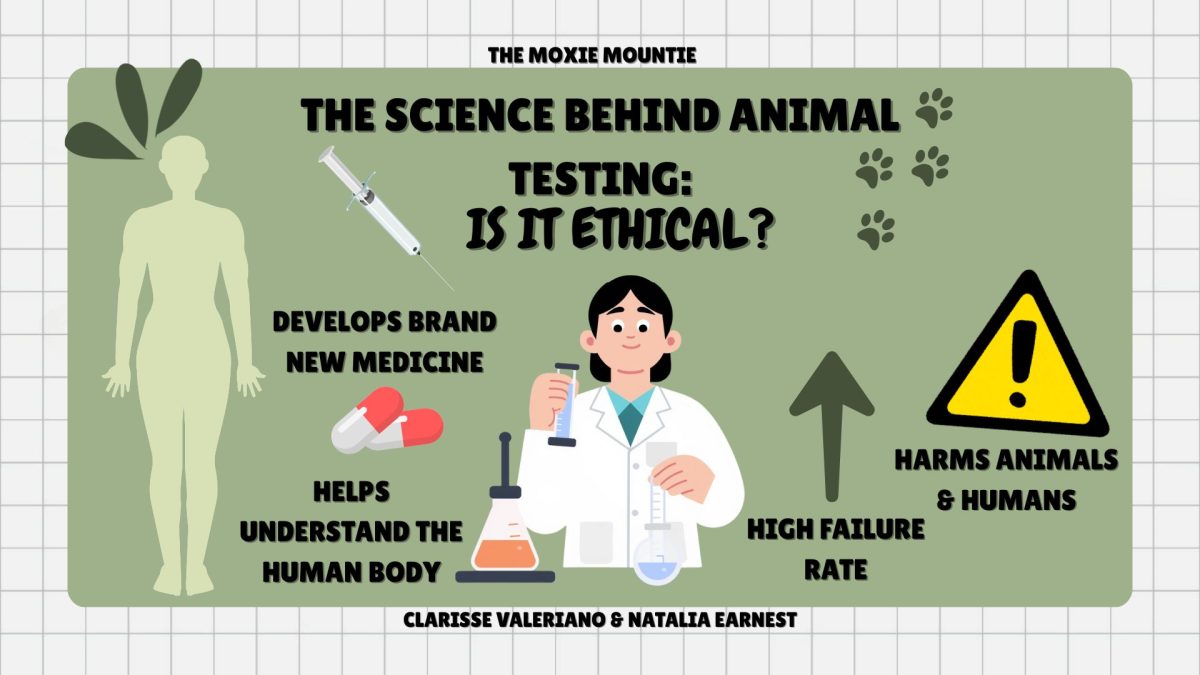
The history of animal testing dates back centuries, and up to the present day. This common phenomenon has been around for over 2,000 years and has drastically changed over time, shifting from scientists analyzing anatomy and physiology to conducting medical research for humans. There are mixed opinions about this topic on whether it is ethical or unethical towards society.
According to People for the Ethical Treatment of Animals (PETA), the definition of animal testing refers to performing unnatural and often painful experiments on animals that are held captive. Scientists perform research on animals while holding them in isolated cages, away from their natural environment. This can cause immediate distress for an animal, especially when they’re locked in an unfamiliar setting and away from their own species.
Animals undergo the same amount of pain as humans without a pain relief drug in surgery because they are sentient beings, meaning they are conscious and able to feel the sensations humans do. While these experiments go on, they suffer from continuous physical and mental abuse that causes psychological trauma. Though they do not have a voice to protest, it is clear that they are suffering from these horrific experiments.
According to Statista, the United States was the world’s largest user of animals for testing and research, with around 20 million animals, followed by China with 16 million, Japan with 11 million, and Europe with 9.4 million.
Scientists have brainwashed society into thinking that animal testing is a safe and positive way to detect disease, but that is not the case. Mainly, animals are used for medical, chemical, and cosmetic purposes. According to Cruelty Free International, animal tests do not guarantee safety for humans. Sometimes, safe products are discarded, while harmful products are kept after animal testing. This leads to the lives of humans and animals at risk.
The National Institutes of Health (NIH) spends billions of dollars constructing these tests. Most of the time, these tests come back as a failure, with a failure rate of 92% according to NIH. This act is a waste of money and endangers the lives of animals. Millions of animals have lost their lives in these experiments. Knowing that the failure percentage is above 90% indicates that these tests are not as reliable in helping both humans and animals.
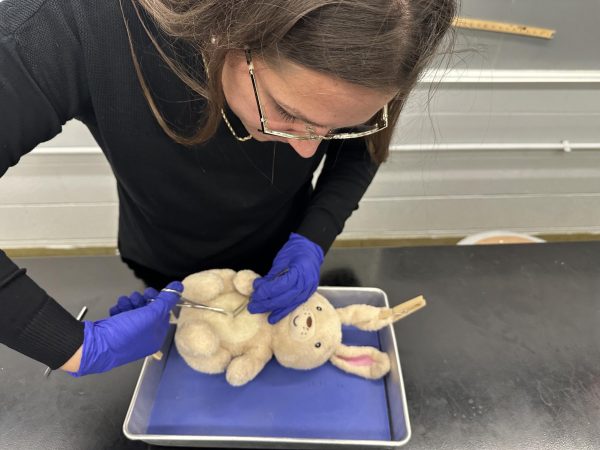
Animal testing has always been a vital part of scientific research, playing a major role in shaping the medical world we know today. While controversial, the benefits of using animals in experiments are significant and have contributed to many scientific and medical breakthroughs
A key asset in animal testing and research is that it helps scientists understand the causes of diseases and how the body works in sickness and health. By observing living systems, researchers can study how illnesses begin and spread, which is something simple lab cells can not always show. This has helped researchers learn about conditions like cancer, diabetes, and neurological disorders.
Because many animals share biological similarities with humans, with similar DNA, organs, and physiological systems, researchers can use animal models to decipher human biology and physiology. For example, mouse and rat studies have guided doctors in learning how the heart and nervous system function, giving major insights into human health and disease.
This deeper understanding then enables scientists to design and test new therapies and interventions that improve health. Animal studies have been critical for testing whether potential treatments are safe and effective before human trials begin. For instance, vaccines for polio, smallpox, and recent COVID-19 vaccines were first studied and tested in animals, giving researchers vital data that helped protect millions of people worldwide.
Animal research has also benefited both humans and animals. Many drugs and procedures first developed through animal work are now used in veterinary medicine, helping pets, livestock, and endangered species live longer, healthier lives. Vaccines and treatments for diseases like rabies, canine distemper, and heartworm in animals all stem from scientific studies that began with animal testing.
In the United States, thousands of research facilities conduct experiments using animals, with recent data showing 851,000 reported animals in research settings in 2024 among species covered by reporting laws. Supporters argue that this work helps scientists develop vaccines, surgical techniques, and therapies that would otherwise take much longer to discover.

Although animal testing has been around for centuries, this controversial topic still sparks uncertainty all around the globe, whether it is on social media, in the news, or from peers. The topic of whether the science behind animal testing is ethical or unethical remains unguarded.