
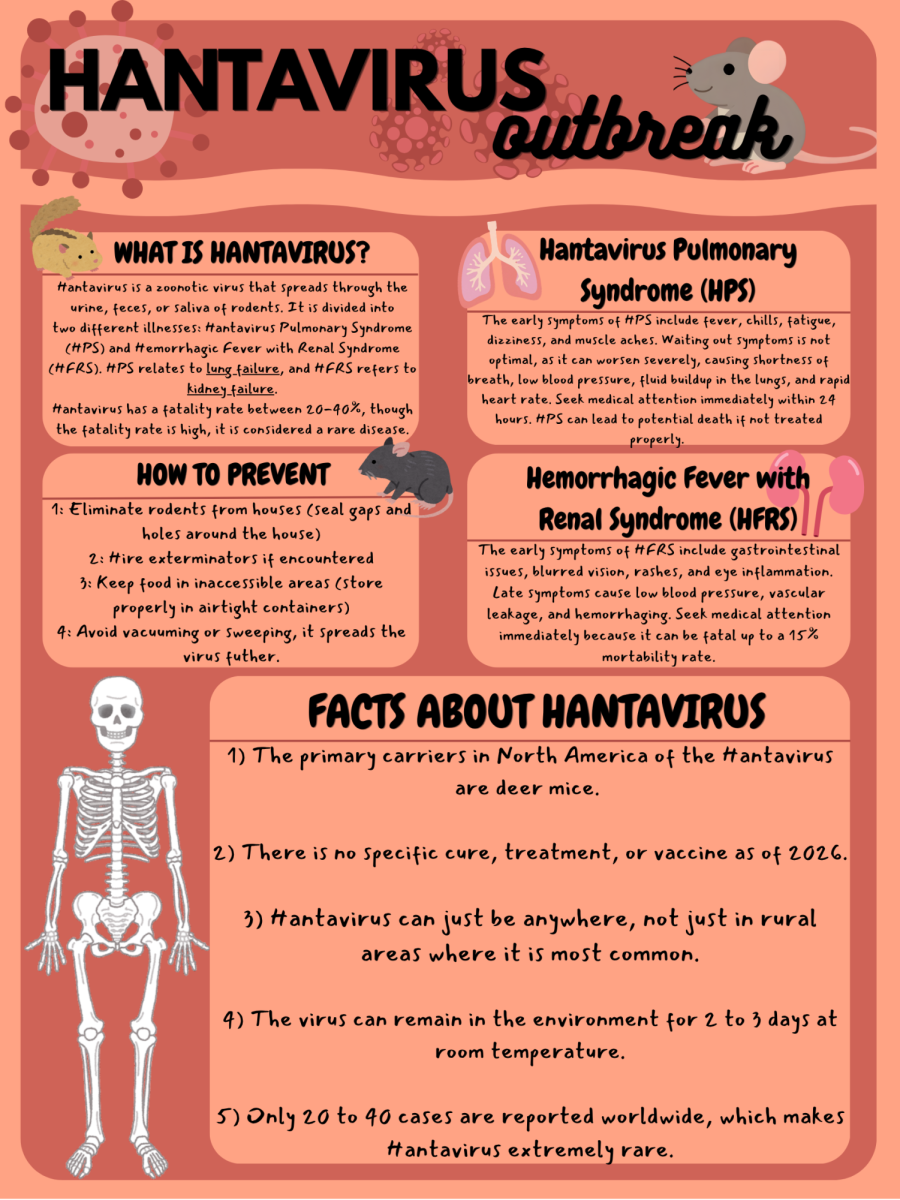
Recently, residents around the world have been fearful of the new hantavirus outbreak that first took place on the MV Hondius, an Oceanwide Expeditions cruise, with three people dying on the ship. Officials believe the virus originated when an elderly couple participated in wildlife expeditions before boarding the ship in Ushuaia, Argentina.
After the outbreak, 18 of the cruise passengers are in the United States, with 16 in Nebraska and the other two in Atlanta, Georgia. One of the two in Atlanta is experiencing symptoms.
Hantaviruses are groups of viruses that naturally infect rodents, and they can sometimes be fatal to humans, depending on the type of virus and the geographical location. The infection is transmitted through contact with the rodent, their urine, droppings, or saliva.
But how can a person know they have the virus? Symptoms begin between one and eight weeks of exposure, and common indicators include fever, headache, muscle aches, abdominal pain, nausea, and vomiting.
While there is no specific cure for hantavirus, patient care consists of clinical monitoring and management of respiratory, cardiac, and renal complications.
To help prevent the disease, precautions include maintaining space and ensuring it is clean, storing food securely, and dampening any contaminated areas before proper cleaning.